

For players in Canada playing Cash or Crash Live, that heart-pounding climb of the payout multiplier is tough to top. But what takes place when you pair that adrenaline with a small amount of stats? Switching from gut feelings to a evidence-based approach can transform how you approach. This post explores the real instruments and methods for tracking stats. These methods can provide you a better understanding of patterns, help you manage your gameplay, and promote more informed choices in the real-time game.
How Statistical Analysis Is Important for Live Game Shows
A game like Cash or Crash Live looks like pure luck. The multiplier rises, it crashes, and the suspense is live. Yet every single round produces information: the exact point it crashed, how long each segment lasted, the colors that appeared. Analysis tools process this data to reveal frequencies and distributions. For a Canadian player who likes to think things through, this isn’t about uncovering a secret formula to win every time. It’s about building a more disciplined and clear-eyed approach to how you play and how you handle your money.
Understanding statistical tendencies aids set realistic expectations. It takes the mystery out of randomness by putting numbers to it. This understanding aids in crafting personal tactics, like choosing where to set an auto-cashout or recognizing when a session is particularly volatile. The shift is meaningful: you go from just observing things happen to playing with more awareness. That mindful approach is a fundamental principle of responsible gaming here in Canada.
Key Metrics to Track in Cash or Crash Live
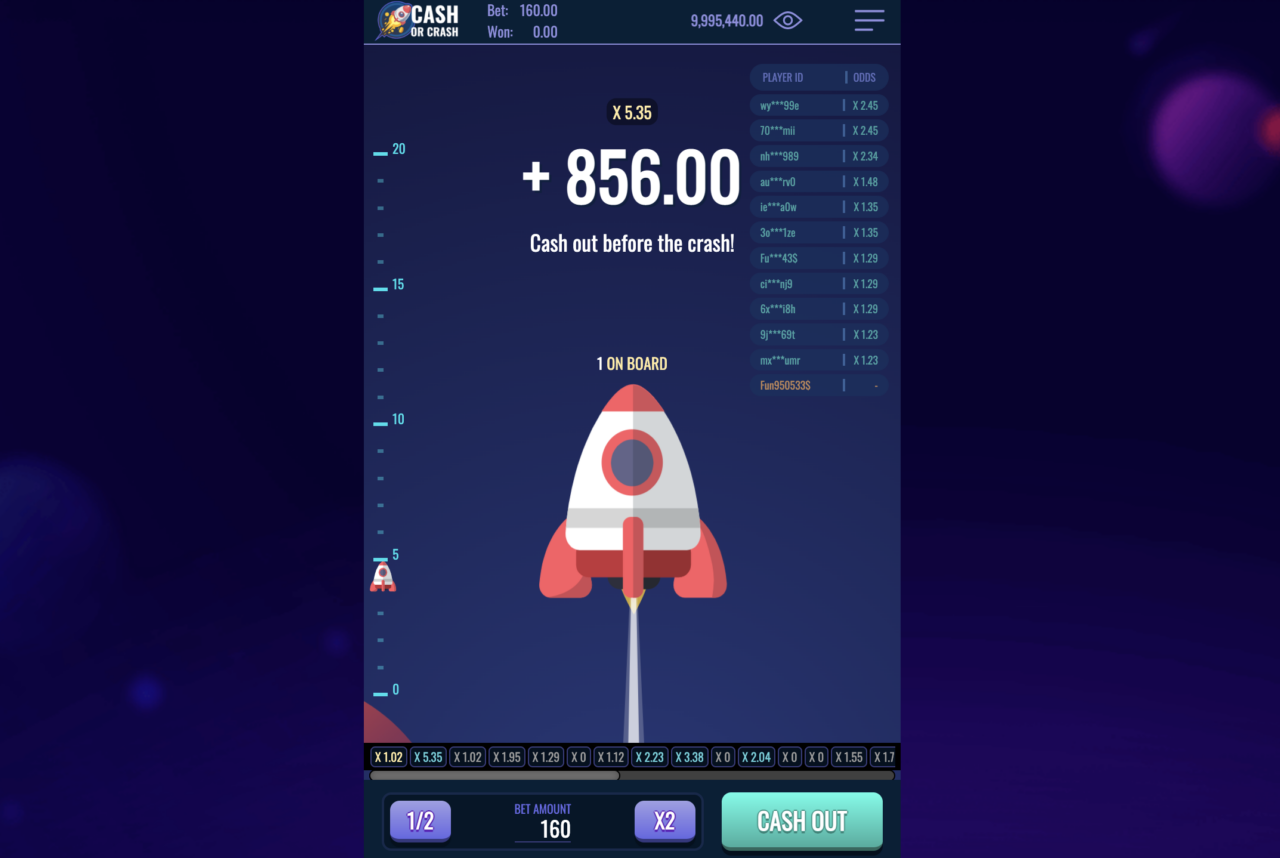
Good tracking starts by understanding what to track. The most important number is the multiplier for every round. Recording this shows you the distribution. You’ll see how often the game stops on a low multiplier in contrast to those rare, high-payout ones. Another helpful measure is the sequence of segment colors. You might identify short-term trends in the green, yellow, red, and blue segments, despite the fact that each result is unrelated.
Remember to record your own performance. This includes your win/loss ratio per game session, your typical payout multiplier, and your total return over many games. Metrics about your discipline are also vital. Did you follow your pre-set loss limit? Did you really quit after hitting a win goal? Recording these details is what makes play sustainable for the long run.
The Myth of Pattern Recognition and True Randomness
Let’s dispel a major misunderstanding straight away. In a completely random game, previous outcomes do not affect future ones. Stats cannot indicate where the next round will crash. Its purpose is to reveal the long-term behavior of the game’s algorithm. Canadian users should understand: seeing ten low multipliers in a row does not make a high one ‘due.’. It merely indicates a streak, which is an expected occurrence of a huge sample of random events.
The human mind are wired to spot patterns where none occur, a quirk called apophenia. Statistical tools counter this impulse by delivering plain data. They show that while streaks happen, they still fall inside a structure of randomness. This factual understanding is a robust defense against recovering losses or succumbing to superstitions. It encourages healthier habits at the game.
Responsible Gambling and the Constraints of Analysis
Useful as they are analytical tools may be, they need to operate within the non-negotiable framework of safe play. For Canadian gamblers, grasping the constraints of data is as crucial as using its information. No data analysis can erase the built-in house edge or promise profits in a game of chance.
The chief aim of these tools should be to enhance your understanding and encourage discipline, not to chase a nonexistent “winning system.” Keep in mind that all licensed casino live shows in Canada, including Cash or Crash Live, use approved Random Number Generators for their basic outcomes. This ensures each event is unpredictable and honest. Data summarize what already happened. They do not control what happens next.
Data as a Guide, Not a Crystal Ball
The key point is: statistical analysis gives you a guide to likelihoods, not predictions. It tells you what *can* happen and the rate at which it *has* occurred. It cannot tell you what *will* happen next. Mistaking chance for certainty is a shortcut to trouble. Canadian gamblers should use data to control their expectations and their funds, not to try to outsmart the random number generator.
A balanced approach with numbers means embracing variance. Despite having a exact historical distribution, your near-term performance will swing wildly away from the average. A reliable approach prepares for these expected variations. It never involves chasing losses in a foolish attempt to push the statistics back to their theoretical average.
Combining Tools with a Balanced Mentality
The endgame is to weave analytical tools into a balanced and healthy gaming mindset. This entails establishing firm boundaries for time and money before you start gaming. Treat any wins as a welcome bonus. Never gamble with money you need for rent, bills, or groceries. Gamblers in Canada have access to outstanding responsible gambling tools. Utilizing statistics should complement these tools, not take their place.
If tracking data or crunching numbers starts to seem like work, causes stress, or triggers fixation about the game, rest. The live dealer show is meant to be enjoyable and communal. Analytical tools should contribute to that enjoyment by offering a dimension of intellectual engagement. They should never become a cause of stress or unrealistic expectations.
Kinds of Data Utilities and Tracking Techniques
From Canada participants have a few distinct ways for studying Cash or Crash Live records. You can go from simple hand-written logs to more complex software. Your best pick relies on your level of tech proficiency and the time you are willing to spend. The goal is always the same: collect useful information without ruining the enjoyment from the session’s tension and group dynamic.
Hand Tracking and Spreadsheets
The quickest approach to start involves recording results manually. Use a notepad or use an electronic sheet in Google Sheets or Excel. Record the data per game. Basic fields should include Round Number, Crash Rate, and Color Segment. With time this set of information becomes incredibly useful. If you are familiar with some functions, the table can generate averages, occurrences, and even plot charts of the data patterns.
This active technique offers an additional advantage: it forces attentiveness and mindful play. The simple act of noting each session slows things down, giving you a moment to reflect before your next move. It transforms into a personal gaming journal that documents not only outcomes, but also how your tactics and your responses changed over time. That’s gold for honest self-review.
External Applications and Browser Add-ons
If you’d rather streamline the procedure, consider third-party analytics tools and browser extensions. These applications run quietly, recording game data directly from the gaming interface. They produce real-time stats, bar graphs of crash points, and graphs of current tendencies on their own. This gives you a ton of time and allows you zero in on the actual gameplay.
Players in Canada need to be cautious in this regard. Investigate thoroughly before installing any third-party software. Only use tools from reliable providers, and make sure they comply with the game provider’s terms of service. Security is the top concern. It should never request your login details or disrupt the gaming software beyond gathering what is already shown on your display.
Public Information Hubs and Online Communities
The crowd also holds power. Certain online platforms and boards gather play statistics from thousands of rounds, contributed by players worldwide. Analyzing these extensive communal databases can provide a far better understanding of the casino’s mathematical framework than any individual could gather by themselves.
For those in Canada, participating in such forums gives two perks. You obtain a large dataset, and you can exchange ideas with other members. These talks can show you alternative approaches to data interpretation and reveal typical pitfalls. It’s a great way to broaden your understanding. Just be sure to check the credibility of the source before you take its data as gospel.
Applying Statistical Insights to Gaming Strategy
Compiling data is just step one. The real payoff comes from leveraging it wisely. Let statistical insights shape your strategy, not dictate rigid commands. The main idea for Canadian players is to use facts to reinforce disciplined money management and personal goals. This introduces a layer of control to a game that’s essentially based on chance.
Budget Management and Risk Assessment
Analyzing your win rates and multiplier distributions directly plays into sensible bankroll management. When you grasp how frequently different outcomes pop up, you can more effectively assess the risk of your bet sizes. For example, your data might reveal that a 10x multiplier hits about once every 20 rounds. That understanding enables you to size your bets so you can weather the expected dry spells without blowing your budget.
This numbers-based approach to bankroll management is a essential part of playing responsibly. It prompts you to see your gaming funds as a predetermined budget for entertainment, not an investment for certain growth. Defining session limits based on statistical expectations, rather than on a hot streak or a gut feeling, is a wise move for any player.
Establishing Informed Cashout Points
One of the simplest uses of tracking data is picking your auto-cashout multipliers. By reviewing the past distribution of crash points, you can assess the likelihood of the game attaining certain levels. Say your data reveals the multiplier crashes before hitting 2x about roughly half the time. You may choose that an auto-cashout at 1.9x will secure regular, smaller wins.
On the other hand, a player willing to take more risk might go for less common but larger multipliers, like 5x or 10x, aware they’ll hit less frequently. The key is that the choice is based on historical frequency, not a guesswork. This lets Canadian players intentionally tailor their gameplay to their personal appetite for risk and reward.
Spotting Volatility and Timing of Sessions
Data tools can enable you spot high-volatility periods. These are fluctuations between very high and very low multipliers. Sometimes, the game might seem more consistent. Some players pursue risky periods for a chance at big profits. Others prefer calmer sessions. Data analysis might uncover some loose patterns in volatility by session, but this isn’t a predictive science.
What’s more, tracking your own performance can indicate your optimal play duration. If your records suggest you begin to act impulsively once about 45 minutes have passed, use that insight. Establish a strict cutoff. This kind of self-awareness, pulled from your own statistics, acts as an effective strategy to ensure your gaming remains entertaining and responsible.
Beginning with Your Record Keeping
Initiating a data recording routine for Cash or Crash Live is straightforward. Canadian gamblers can begin for free. The trick is to be consistent and have a clear reason for doing it. Start small, focus on some critical metrics, and let your method develop as you find out which details really aid your individual approach to the game.
A Basic Beginner Template
First, start a new sheet. Create columns labeled: Date/Time, Round Number, Wager Size, Your Payout Multiplier (or write “Crashed”), Crash Point, and Notes. For your first 100 rounds, simply record the data. Next, use elementary calculations to determine averages and construct a straightforward bar graph. Display the frequency of crashes in defined ranges. Consider 0-1x, 1-2x, 2-5x, and 5x or more.
This starter dataset will promptly reveal the game’s basic shape. Don’t overlook the “Notes” column. Employ it for subjective reflections. Were you impatient? Did you veer from your planned approach? Combining these qualitative notes with the hard numbers gives you a complete view of your gameplay. That’s incredibly useful for tightening up both your strategy and your discipline.
Developing Your Data Method
When you feel confident, you can incorporate more advanced metrics cashorcrash.ca. Determine your profit to user for a session by dividing the total amount you got back by the total amount you bet. Monitor your results on various weekdays or different times of the day. Look for links between your mood from your notes and the quality of your decisions.
Your data tracking system should develop as your knowledge increases. The goal isn’t to build a massive, overwhelming database. It is to create a custom dashboard that emphasizes the figures most important to you. Maybe you want to prolong your gaming session. Maybe you want to achieve particular multiplier milestones. Or maybe you simply want to adhere to a steady entertainment budget. Let your tracking reflect that.
Empowering the Canadian Player
Data analysis and tracking tools give Canadian Cash or Crash Live players a robust way to enhance the game. By turning raw outcomes into comprehensible data, you can build a more organized, informed, and ultimately more fulfilling approach. This process pulls back the curtain the game’s mechanics and improves the habits of mindful play and smart bankroll management.
The path from casual viewer to an methodical participant is a gratifying one. It adds a rich layer of tactics to the live thrill. Never forget, though, that the heart of the game is its unforeseeable excitement. Use statistics as a perspective to better see the show’s dynamics and your own patterns. Always maintain responsible gaming front and center. For players from Vancouver to Halifax, this measured approach keeps the experience entertaining, engaging, and securely under your control.
